Kyros Takes Shape While the Games Keep Moving
It has been a little while since my last post, but I have not exactly been sitting still. Most of my free development time has gone into a new project called Kyros, while Warframe, Diablo IV, and Path of Exile 2 have all given me plenty to keep an eye on.
Kyros: building a chat client I can make my own

Custom Kyros artwork built around the project emblem and its chat, scripting, networking, and security focus.
Kyros started for a pretty simple reason: my mIRC license expired. Instead of renewing it, I decided to try my hand at building something of my own. I have made attempts at writing IRC clients and related tools in the past, but never anything on this scale. What began as an alternative for my own use has grown into a much larger project and a chance to build the kind of chat client I actually want to use.
At its core, Kyros is a Windows chat client with IRC support, but the part I am most excited about is how far its Lua scripting system has grown. I do not want it to be a client where scripts can only change a color or react to a line of text. The goal is to give scripts enough safe, well-defined tools to add genuinely useful behavior.
The current 1.1.1 release is a big step in that direction. Lua scripts can now use permission-controlled TCP, TLS, UDP, and WebSocket connections. They can also register their own chat providers, define provider-specific connection settings, handle conversations and member lists, publish useful protocol traffic to the Raw window, and even use a generic OAuth authorization-code flow.
That flexibility also creates a lot of responsibility. Network access is tied to the script, its content fingerprint, the transport, and the destination. Permissions can be granted for the current session or remembered only while the script remains unchanged. I have also been working on resource limits, cleanup, secret handling, certificate warnings, and keeping network callbacks from locking up the interface. It is not the flashy side of the feature, but it is the work that makes the flashy side safe enough to use.
There have been plenty of quality-of-life improvements too: the script editor is now modeless, recently used chat views restore in a more natural order, connection profiles understand both IRC and scripted providers, and long lines in the Raw window no longer make text selection freeze. Kyros is starting to feel less like an experiment and more like the application I pictured when I began it.
The latest release and full notes are available on the Kyros GitHub releases page.
Warframe after The Icebind
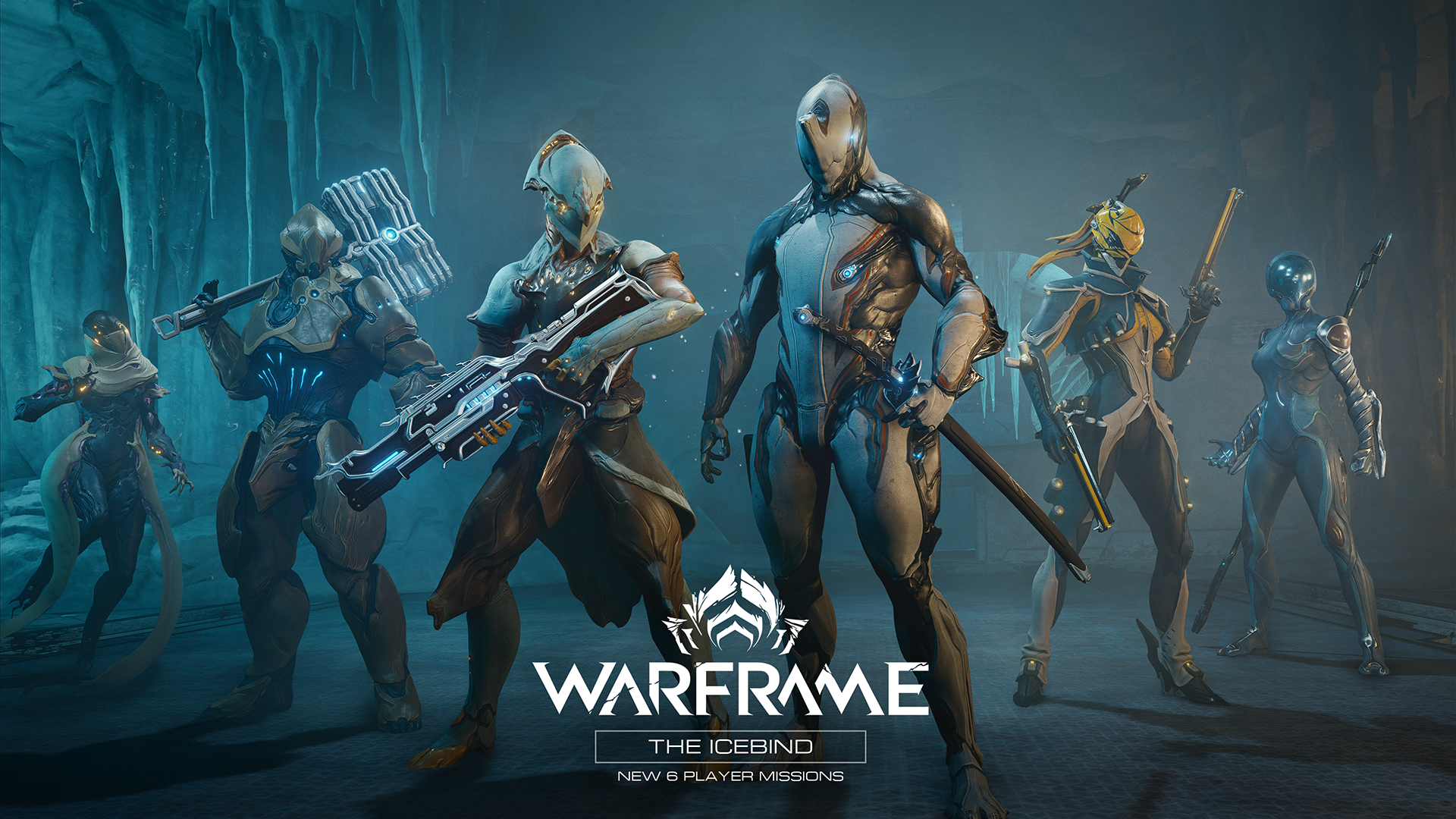
Official Update 44.1.0: The Icebind artwork via Digital Extremes.
When I last posted, The Icebind was still a couple of days away. It is live now, and it brought the part of Iceblade of Narin that I had really been waiting to try: six-player missions built around level 999+ enemies, randomized Cryobells, stacked modifiers, side objectives, and a weekly limit that keeps the mode from becoming another endless farm.
It also completed the other half of the Riven expansion. Riven Splicing uses Splicers earned from The Icebind to combine compatible traits into new locked traits. Digital Extremes has already followed the launch with several rounds of fixes and tuning, including changes to Cryobell voting, progression blockers, Riven behavior, and some of the stranger interactions introduced by the new traits.
The biggest Riven change came last week, when Digital Extremes retired Riven Disposition entirely. Disposition used to give every weapon its own multiplier, ranging from 0.5 for popular weapons to 1.55 for lesser-used ones. Now every Riven uses the same stat range, equivalent to a Disposition of 1.2 under the old system. That is a substantial increase for popular weapons such as the Nataruk, Grimoire, Acceltra, and Acceltra Prime, while a smaller number of high-Disposition weapons came down slightly. Riven trading was briefly disabled ahead of the change so players would not make deals without knowing how the values were about to move, and it returned once Hotfix 44.1.3 went live. Digital Extremes has a full explanation and conversion list.
The other major development is Epoch Operation: Taubound, which is live through November 17 and is helping set the stage for Warframe's trip beyond the Origin System.
That makes Friday's stream especially interesting. Devstream 198: Tau Part One airs Friday, October 30 at 2 p.m. ET and is the first of two Tau showcases. Digital Extremes says the team will walk through the scope of Tau and what lies beyond it. Watching the full stream also earns a Tauforged Archon Shard Grab Bag. After hearing about Tau for so long, I am ready to see how much of it they are finally willing to show.
Diablo IV opens another PTR
Official Diablo IV 3.3.0 Season 16 PTR artwork via Blizzard.
Diablo IV's 3.3.0 PTR for Season 16 is open from October 27 through November 3. This round is testing major additions to War Plans across both Seasonal and Eternal play, reworks for Infernal Hordes, The Pit, and Lair Bosses, plus new Horadric Items designed to interact with the Talisman system.
I am curious to see how the activity changes land. Diablo IV has improved a lot by revisiting its older systems instead of simply piling another temporary mechanic on top, and the PTR is the best chance for players to find the rough spots before the season begins. Blizzard has also said that some features from Season of Hell's Legacy will carry forward, although those carryovers are not part of this test.
You can read the full schedule and changes in Blizzard's 3.3.0 PTR overview.
Path of Exile 2 finally has a 1.0 date
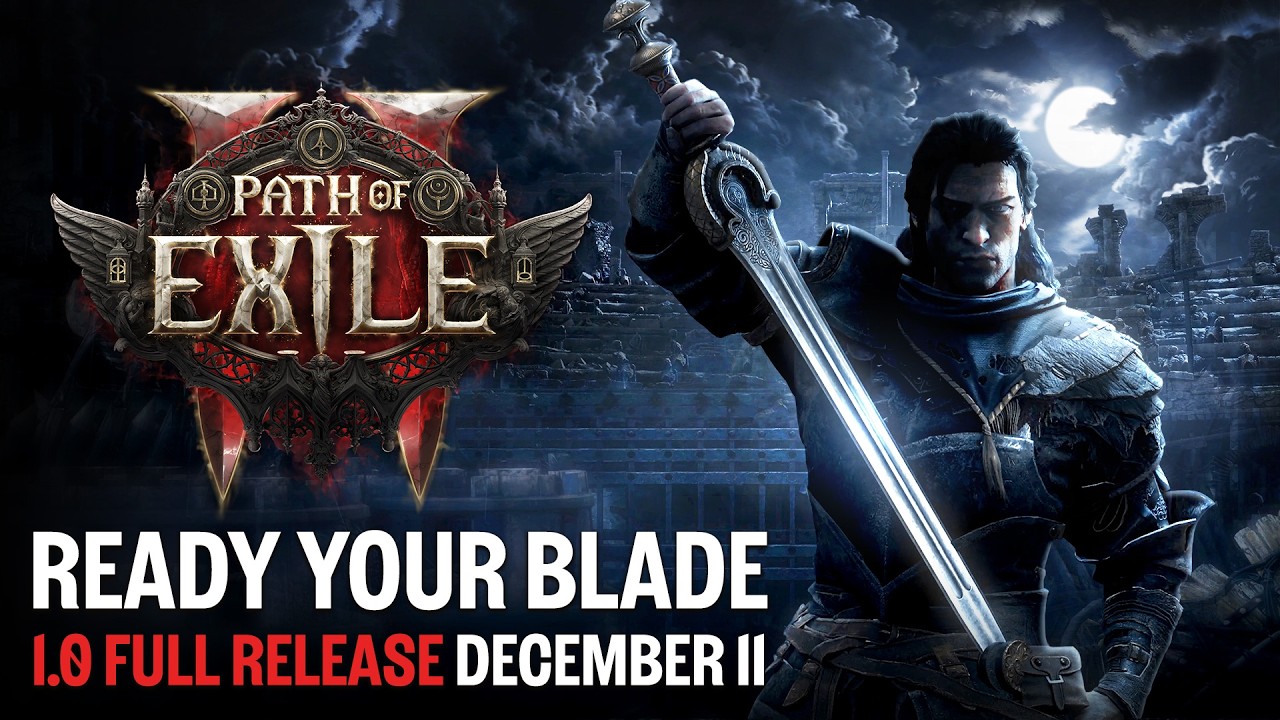
Official Path of Exile 2 full-release reveal imagery featuring the Duelist via Grinding Gear Games.
Path of Exile 2 now has a finish line for Early Access: December 11, 2026. Version 1.0 will make the game free to play, complete the campaign, and bring the large balance pass Grinding Gear Games held back for the full release.
The launch also introduces the Duelist, Path of Exile 2's long-awaited sword class. He can fight with a sword and shield, dual-wield swords, or carry a two-handed blade. His combat is built around flowing between ready, sand, and blood stances, with parries and combo-driven attacks giving melee a different rhythm from the mace and quarterstaff styles already in the game. Grinding Gear Games has not revealed his Ascendancies yet, but they are expected to be shown at ExileCon before launch.
There is still more to learn, with ExileCon set to reveal additional details in November, but having an actual date changes the conversation. Early Access began in December 2024, so the full launch arrives almost exactly two years later. I am especially interested in how the completed campaign, the Duelist, and the broad balance changes reshape the path into endgame, and whether 1.0 can make the whole experience feel like one complete game rather than a collection of strong pieces still waiting to be joined together.
Between Kyros reaching a much more capable state, Tau finally coming into view, a fresh Diablo PTR, and Path of Exile 2 preparing to leave Early Access, there is a lot happening at once. I will have more to say once I have spent more time with all of it -- and once Kyros gives me a chance to come up for air.
Comments